
How to Check Criminal History in Lenox
Choose the Lenox record by asking what happened and when. The police report is the closest account of a city incident. The Taylor County jail can confirm a recent booking, while the court docket shows what the prosecutor filed. An Iowa Division of Criminal Investigation check is broader than one city, but it is not a copy of any of those local files. Following the sequence prevents a holding allegation from being mistaken for a final court result.
- Start with the official Lenox city or police contact for a Lenox-created incident or arrest narrative.
- Describe the event with a date, location, report number if known, and the exact record requested.
- Call the Taylor County jail for current booking or transfer facts because Lenox has no verified city holding facility.
- Search Iowa Courts Online with Taylor selected, then ask the clerk for filed pleadings or a certified disposition.
- Use the Iowa DCI portal for a statewide Iowa history when a city report and one court case are too narrow.
A name alone is weak proof in a Lenox search. Compare middle initials, dates, Taylor County, and the Lenox case number. For self-review, a missing or stale outcome should be checked against the clerk's final disposition before asking DCI to correct its record.
Lenox Arrest Records in City Code
Lenox differs from the county's other small communities because its official ordinances establish a police function and require the chief or department to keep a record of city arrests. That makes the Lenox Police Department the originating custodian for its own incident and arrest narratives. It does not make the city record a full criminal history. Booking intake belongs to the Taylor County jail, and the court record belongs to the clerk after a charge is filed.
The official Lenox website is the best place to confirm the current Lenox police contact before sending a request. The published Lenox research did not establish a stable records-unit phone, email, named chief, or counter schedule, so those details should be checked live rather than inferred from an old listing.
The ordinance duty to keep arrest records does not make every part of a Lenox investigation public. Iowa's chapter 22 exemptions can still protect active investigative work, juveniles, victims, medical details, and personal identifiers.
The official Lenox city homepage also supplies useful local context for that first contact.

That city source is the route to Lenox-originated records, not a substitute for the county court docket.
The Lenox Police Department
A Lenox police file can include the dispatch facts, officer narrative, location, event time, probable-cause basis, alleged offenses, and references to evidence or witnesses. Some identifiers, victim-sensitive details, juvenile material, and active investigative work can be redacted or withheld. The report describes the police response. It does not prove guilt and does not guarantee that the County Attorney filed the same charge.
No verified Lenox police blotter, mobile app, online request form, or public report portal was located. Direct Lenox contact is therefore the accurate channel. Ask whether the Lenox Police Department or City Hall currently accepts a narrow written request, what delivery formats are available, and whether any actual copy cost applies. Do not assume that the absence of an online form means the record is unavailable.
Note: Lenox police records and Taylor County court files have different custodians, even when both arose from the same event.
Request Lenox Police Records Directly
A precise Lenox records request is easier to locate than a demand for every item tied to a name. State the record type, approximate event date and location, report number if known, and the desired copy or inspection format. Include contact details for a response. Those facts help the city find the file, but the research does not establish that each is a mandatory form field.
- Identify the incident or arrest report, not a vague background file.
- Give the narrow date range and the Lenox location.
- Add the city report number when it is known.
- Ask for electronic delivery or inspection, as preferred.
- Request a cost estimate before copies are made.
If part of the Lenox file is confidential, ask whether basic incident facts or a redacted Lenox copy can be released. Iowa law treats the immediate facts surrounding an incident differently from some investigative detail. A denial should identify the legal basis, and the Iowa Public Information Board offers chapter 22 guidance.
Arrests and Bookings in Lenox
A Lenox arrest can create two local records within a short span. Lenox Police creates the officer report. Taylor County jail staff create booking data after intake at the sheriff and jail complex in Bedford. The booking record can show intake time, holding allegations, bond or hold information, release or transfer, and a linked case when available. Those fields can change as the case moves forward.
Taylor County publishes no verified online inmate roster or daily booking log. For the newest Lenox custody information, call the sheriff and jail at 712-523-2153. Ask whether the person is held, which agency made the Lenox arrest, the public holding charge, and whether a transfer or court event occurred. Then search Iowa Courts Online after allowing time for a Lenox complaint to be filed.
There is also no verified Lenox law-enforcement app or Lenox mugshot gallery. Direct Lenox office contact is not a backup to an official online log here. It is the primary local route.
Three Lenox Criminal Record Custodians
The Lenox report, Taylor booking record, and Iowa court file answer separate questions. Comparing them is more useful than forcing one source to do all three jobs. The first may show why officers acted. The second shows custody intake. The third shows the filed counts and judicial outcome.
| Lenox record | Custodian | Best use |
|---|---|---|
| Police incident or arrest report | Lenox Police or current city contact | Officer narrative and immediate incident facts |
| Booking or custody record | Taylor County Sheriff and Jail | Intake, bond, release, or transfer status |
| Criminal case file | Taylor County Clerk of District Court | Charges filed, docket events, disposition, and sentence |
| Iowa repository history | Iowa DPS Division of Criminal Investigation | Reportable Iowa arrest cycles tied to dispositions |
Lenox charges can differ across the columns. A Lenox booking allegation may be amended, dismissed, or replaced. The final count-level disposition from the court is the sound source for what the judge decided.
Lenox Municipal Court Records
Lenox has no separate municipal criminal court database. Iowa uses a unified District Court system for the relevant criminal and traffic matters. Search the statewide docket with Taylor County selected, then obtain the actual public filing from the clerk in Bedford. The online result is a finding aid. Even a paid Advanced Search subscription does not provide filed document images.
| Court Name | Iowa District Court for Taylor County, with judicial magistrates handling many lower-level matters |
|---|---|
| Case Types Heard | Felonies, indictable misdemeanors, simple misdemeanors, traffic matters, and related proceedings |
| Case Lookup Channel | Iowa Courts Online, followed by the Taylor County clerk for documents |
| What the Docket Shows | Case ID, status, filed charges, dates, events, disposition, hearings, and public financial fields |
| Copies & Fees | Ask the clerk for current plain or certified-copy terms; a current local fee schedule was not found |
A “disposed” label only means the Lenox court case reached an outcome. Read the disposition for each Lenox charge before drawing a conclusion.
Search Lenox Charges Statewide
Iowa Courts Online searches trial-court dockets statewide, which matters because the city does not run its own case portal. Start with the exact case number when known. Otherwise, use a full name and narrow the county to Taylor. A middle name, case date, and case type help separate people who share a name.
| Search field | Use for Lenox records |
|---|---|
| Last and first name | Begin a party-name search with the full legal spelling |
| Middle name | Reduce common-name confusion |
| County | Select Taylor for a Lenox event filed locally |
| Case ID | Use the exact route when a docket number is known |
| Case type and dates | Narrow results in the advanced interface |
Once a likely Lenox docket is found, note the Lenox case number, status, charges, and disposition. Do not rely on a matching name alone, and do not expect the portal to display the complaint, plea, judgment, or other filed document.
For lower-level Lenox cases, Iowa Code chapter 903 supplies the general misdemeanor sentencing framework.
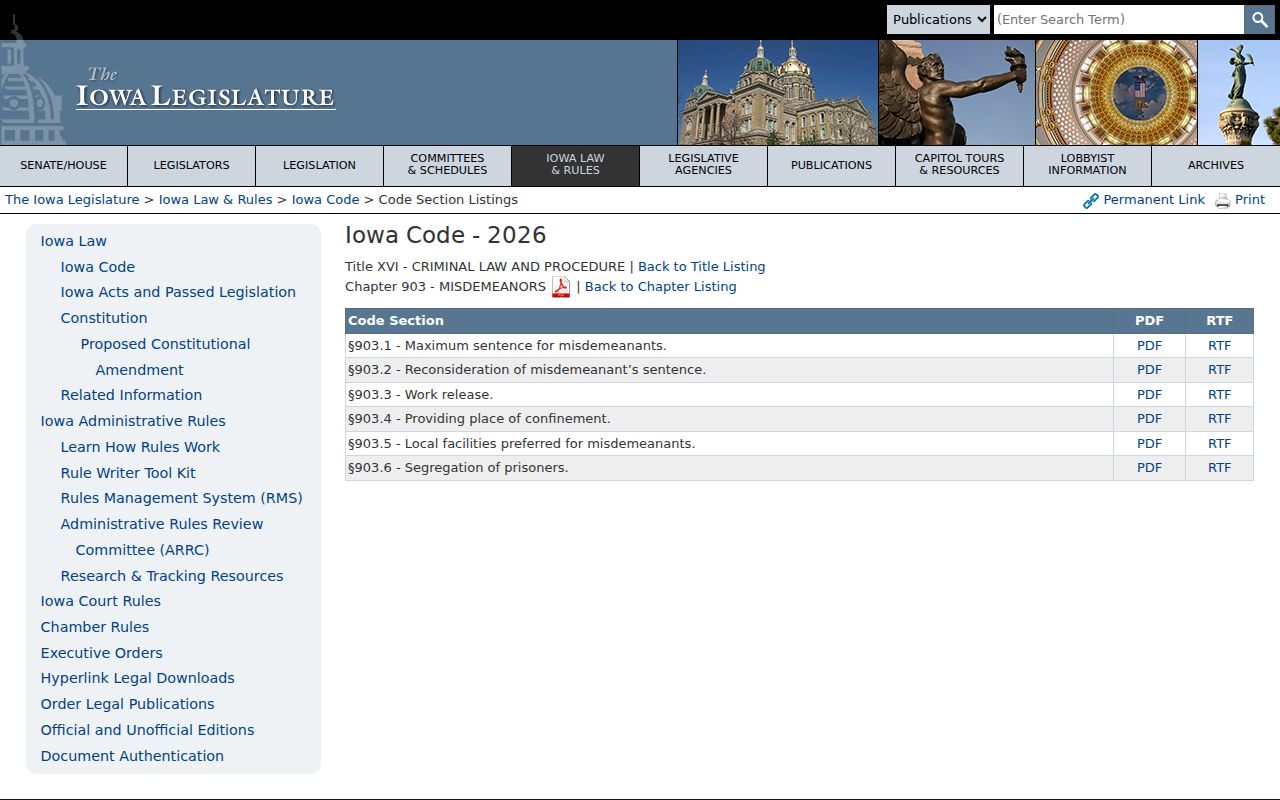
Reading that law beside the filed charge class helps prevent an initial Lenox arrest label from being treated as the final sentence.
Where Lenox Records End Up
Lenox Police keeps its originating narrative, but a booking shifts part of the record to the Taylor County jail. If the County Attorney files a charge, the clerk opens the District Court case. Fingerprint-supported arrest data and later dispositions can feed the Iowa DCI repository. A sentence involving state custody or community supervision can add an Iowa Department of Corrections record.
Record flow: Lenox Police Department › Taylor County Jail and Courts › Iowa Department of Public Safety, Division of Criminal Investigation
Lenox record timing is uneven. The jail can know about Lenox custody before a court case appears. The clerk can post a docket before DCI matches the final outcome to an arrest cycle. The official Fifth District leadership page also documents the corrections district that receives later Lenox supervision records.
Searchers should use the custodian closest to the Lenox record stage being confirmed.
Certified Lenox Criminal Case Outcomes
A certified Lenox disposition comes from the Taylor County Clerk of District Court, not from Lenox City Hall or the police department. Contact the clerk at 405 Jefferson Street, Suite 4, Bedford, IA 50833, or call 712-523-2095. Supply the complete case number and identify the exact judgment, sentencing order, dismissal, or other filing needed.
Iowa felony sentencing authority appears in Iowa Code chapter 902. The official law page provides context for how a Lenox felony judgment can shape the later Lenox record.
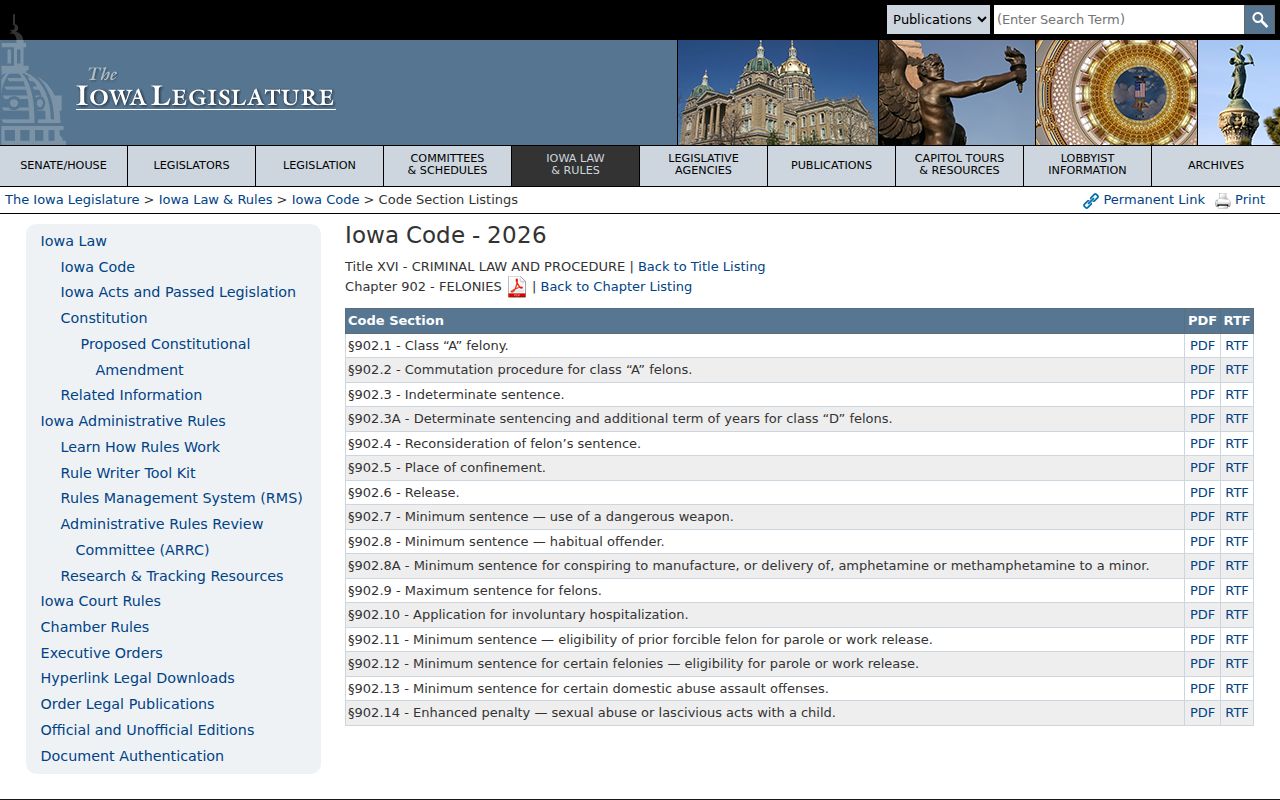
The statute alone is not the Lenox disposition. The signed order in the Lenox defendant's Taylor County case controls.
Lenox Records After Sentencing
County jail custody and Iowa corrections custody are not the same Lenox search. A recent Lenox booking belongs with the Taylor jail phone route. After a Lenox prison commitment or qualifying community-supervision placement, the Iowa DOC locator may display an offender number, status, location, offense, commitment county, and sentence dates. DOC warns that its public data can be incomplete and updates weekly.
The statutory basis for Iowa corrections appears in Iowa Code chapter 904.
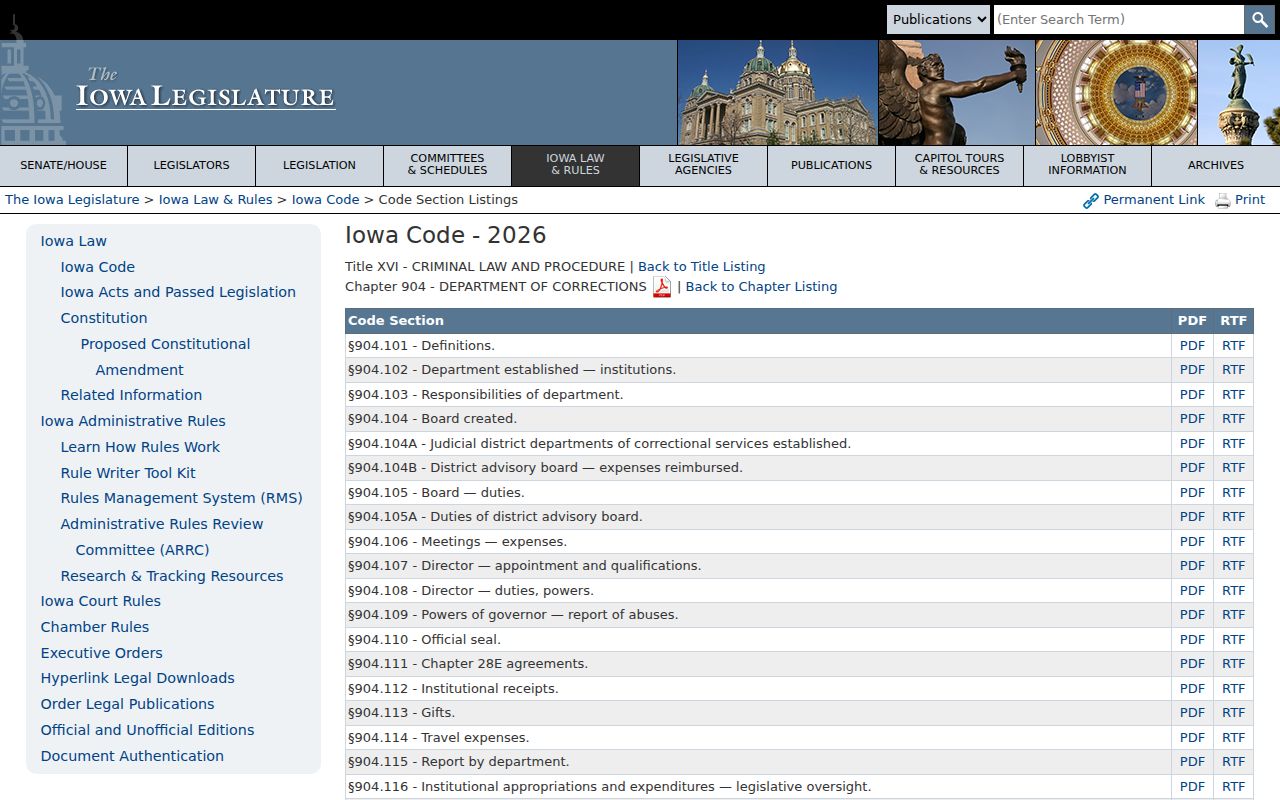
That law page helps explain the state layer, while the judgment and current DOC profile remain the sources for one case.
The Iowa Board of Parole makes release decisions, while DOC and Fifth District staff handle the supervision side of a Lenox record.
Public Access Rules
Lenox police records follow Iowa's executive and local-government public-record framework. Court files follow judicial access rules through the clerk. Access can cover public basic incident facts, but confidential investigative material, protected identifiers, juvenile records, medical information, and victim-sensitive details may be withheld or redacted. A public docket also does not expose every warrant or protected filing.
Key Statutes:
Iowa Open Records Law, chapter 22 gives access to public records subject to specific exemptions and reasonable actual costs.
Iowa Code chapter 692 controls state criminal-history dissemination and gives a subject rights to access and challenge data.
Iowa Code chapter 901C governs specified expungements rather than blanket removal of every conviction.
Use each Lenox record only for a lawful purpose. For a Lenox self-review, resolve a mismatch with the office that holds the original Lenox report, docket, or repository entry.