
Running a Sex Offender Check in Taylor County
Taylor County does not publish a separate local offender map or list. The official starting point is the Iowa Sex Offender Registry, which the Iowa Department of Public Safety's Division of Criminal Investigation manages under chapter 692A. Search by a known name or use place fields to narrow results to Taylor County, Bedford, Lenox, or New Market. The Taylor County Sheriff's Office is the next channel when a public result raises a real concern about an address or compliance.
The state registry is not a general criminal history product. It shows only information made public by registry law, and it does not list everyone who must register. For a Taylor County criminal case or final disposition, use the clerk and Iowa Courts Online. For a cross-state community-safety search, use the national registry after checking Iowa. These sources answer different questions, so one empty result should never erase what another official office may know.
The state registry landing page shows the public route into Iowa's search system.
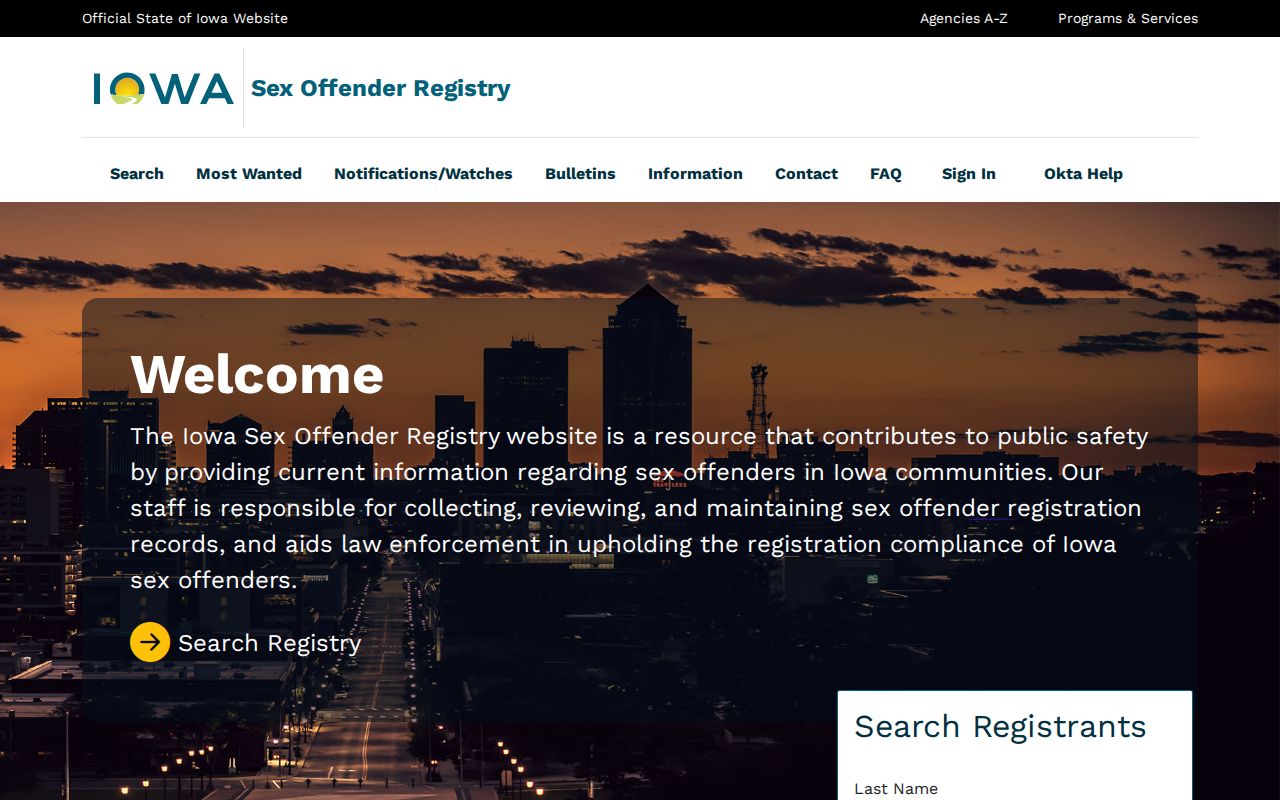
This official entry point keeps a Taylor County registry check within the DCI system that holds the source data.
Taylor County Registry Agreement
Before using gated registry areas, read and accept Iowa's user agreement. It states that the public site is not the entire list of Iowa registrants. Law enforcement may know of people in a community whose details are not shown in the public view. It also warns that the state cannot guarantee every entry is free from error or omission. Those limits matter when a Taylor County search returns nothing or an old address.
For Taylor County users, the agreement also sets a clear line for conduct. Registry information supports awareness and safety planning. It does not authorize a user to threaten, vandalize, assault, or take action against a registrant, a family member, or a person linked to the listed address. Suspected crime or noncompliance belongs with law enforcement, not a confrontation.
The official Iowa registry user agreement displays the warning and consent step before search access.
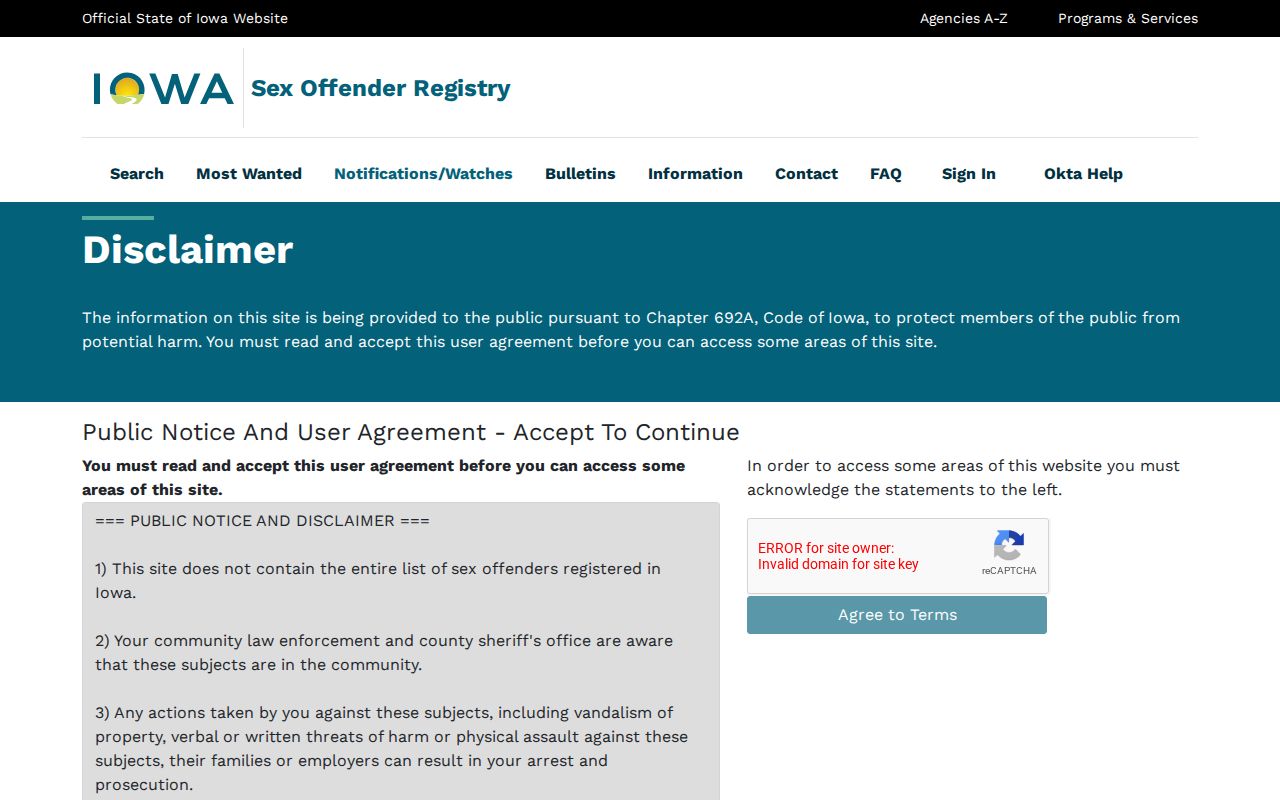
That screen is part of the search process, not a routine banner that should be skipped without reading.
Searching the Iowa Sex Offender Registry
The Iowa registry offers identity and location routes. Start with the smallest set of facts that can separate the intended person from similar names. A county filter can focus the result list, while a city, ZIP code, or address may help with a neighborhood query. Live menus can change, especially radius options, so use the choices shown by the current interface and do not assume a fixed distance.
- Open the official registry and review the conditions of use before selecting the agreement control.
- Choose a name or location route, then enter a last name or a Taylor County place field.
- Compare names, aliases, photos, physical details, and place information before deciding that a result is a match.
- Open the full profile, note the tier, status, offense information, and displayed location, then contact the sheriff if a material fact appears wrong.
| Field Label | Type | Required | Notes |
|---|---|---|---|
| Agree to Terms | Button | Yes for gated areas | Acknowledges the state warning |
| Last Name | Text | Usually principal | Use the spelling shown in source records |
| First Name | Text | No | Narrows a name result |
| County | Dropdown | No | Select Taylor when offered |
| City or ZIP Code | Text or dropdown | Route dependent | Use Bedford, Lenox, New Market, or an Iowa ZIP |
| Address and Radius | Text and dropdown | No | Use only current live choices |
If a Taylor County name or address search yields no result, try the other route and check spelling before calling the sheriff. The public list remains expressly incomplete.
Taylor County Registration at Justice Street
The Taylor County Sheriff's Office serves as the county registration and compliance contact. Its office and jail are at 1601 Justice Street, Bedford, IA 50833, and the main number is 712-523-2153. The sheriff's Civil Division lists weekday records hours from 8:00 a.m. to 4:00 p.m. No separate Taylor County registry schedule or local registration fee was published, so call before going to the office.
Chapter 692A assigns duties to sheriffs, but the public web search and the local compliance file are not identical. The sheriff can receive a credible report that a displayed address appears stale or that a registrant may not be meeting a duty. Give the name shown, the profile link or identifying facts, and the specific concern. Do not investigate at the address or seek nonpublic details about a household.
Taylor County Sheriff's Office
1601 Justice Street
Bedford, IA 50833
712-523-2153
Records: Monday through Friday, 8:00 a.m. to 4:00 p.m.
Note: The Taylor County sheriff is the local compliance channel, while DCI manages the statewide public registry interface.
What a Registry Profile Shows
A public profile can combine identity, appearance, place, offense, and registration data. Not every Taylor County profile carries every possible field, and the level of address detail is set by Iowa law. Match several fields before drawing a conclusion. A photo or name alone can be stale, incomplete, or shared by more than one person.
| Name & Aliases | Published legal name and any aliases authorized for public display |
|---|---|
| Photo & Description | Photo, sex, race, height, weight, hair and eye color, and listed marks where available |
| Registered Location | Statutorily displayed address information, city, county, ZIP, and authorized school or work fields |
| Offense Details | Qualifying offense, jurisdiction, statute, and conviction date when published |
| Tier | Iowa's offense-based tier classification, not a simple danger rating |
| Status | Registration or compliance information shown in the public record |
| Other Fields | Vehicles and additional authorized location details when applicable |
A registry entry is not a full court file. The docket and certified disposition can explain the charge, amendments, judgment, and sentence that the public profile does not reproduce.
Taylor County Searches Near Missouri
Taylor County touches the Missouri state line, so a place-based search may need a second official layer. The National Sex Offender Public Website combines public registry data from participating jurisdictions. It can help when a search area crosses state lines or when a person has moved between jurisdictions. It does not replace the Iowa profile or Taylor County sheriff contact.
Run the Iowa query first when the address is in Taylor County. Then use NSOPW for the broader area and follow each result to the jurisdiction that supplied it. Differences may reflect public-display law, update timing, or how a state reports an address. If the two official layers conflict, ask the agency responsible for the current registration record rather than treating one screen as certain.
The federal NSOPW search interface provides the national comparison layer for a Taylor County border-area check.
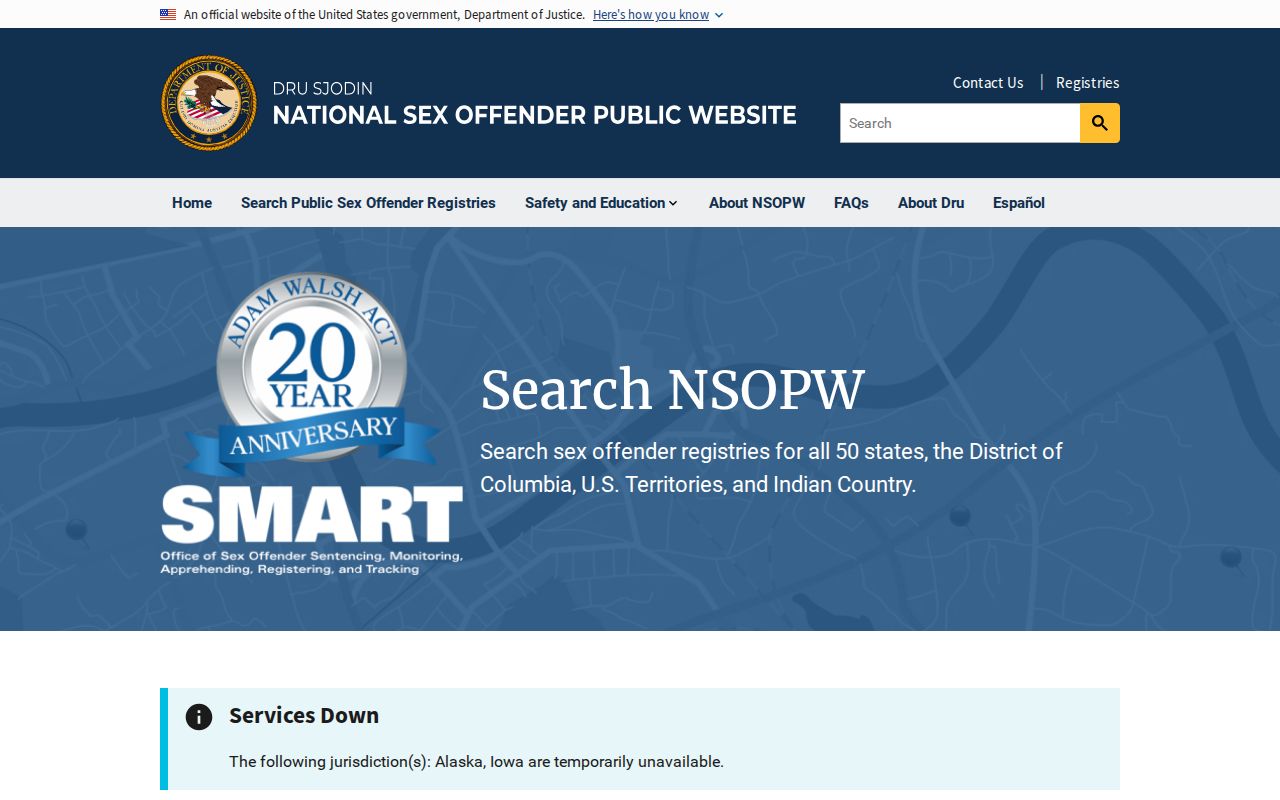
This national view broadens geographic coverage while leaving Iowa and the sheriff as the sources for local verification.
Registration Requirements and Levels in Iowa
A Taylor County registry result uses Iowa's three offense-based tiers. The tier affects the general registration term and verification schedule, but a simple table cannot decide a person's exact obligation. Tolling, modification, the qualifying offense, and other status rules can change the outcome. Sections 692A.102, 692A.106, 692A.107, and 692A.108 control those points.
| Tier | General Duration | General Verification |
|---|---|---|
| Tier I | 10 years | Annual |
| Tier II | 25 years | Every six months |
| Tier III | Life | Every three months |
The official chapter 692A section list places tier, duration, verification, sheriff-duty, public-access, and modification provisions in one source.
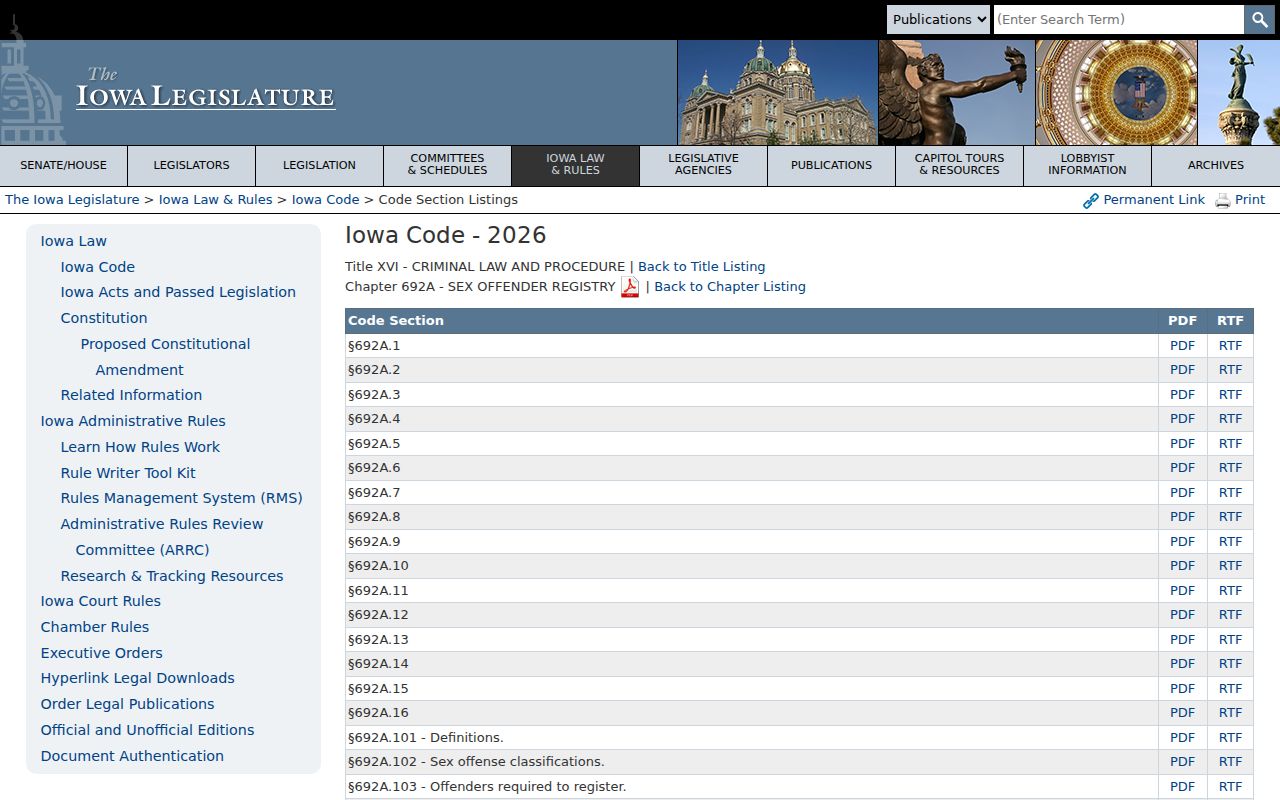
The statute confirms why a tier label should be read with the person's full status and the current law.
Taylor County Residency Rule Checks
Iowa Code section 692A.114 contains residency and presence rules involving schools and child care, while section 692A.113 addresses exclusions and activity provisions. These rules are more specific than a broad claim that every registrant must stay a set distance from every park or public place. The person's offense, status, and the type of location can matter.
For a Taylor County address question, review the current statute and then call the sheriff with the exact location and concern. Do not rely on a map pin alone. A pin may be imprecise, a profile may be awaiting an update, and a residence that seems close to a site may fall under a rule or exception that cannot be resolved from a public screenshot.
Note: A registry map is a search aid, not a parcel survey or a final legal ruling on an Iowa residency restriction.
When Taylor County Registry Data Looks Stale
Update cycles are a practical limit. If an address, photo, vehicle, or status seems old, save the official profile link and note the field in question. Then call the Taylor County Sheriff's Office. A no-result can also arise from spelling, route selection, the limits of public display, or a move to another jurisdiction. The state agreement expressly bars treating the public list as complete.
Keep the report factual. State what the public profile shows and why a current observation appears inconsistent. For a suspected crime or an urgent safety issue, contact law enforcement through the proper emergency or nonemergency channel. Do not visit the listed address, contact household members, publish personal claims, or try to force a person to explain a registry entry.
Taylor County Registry Is Not History
A registry profile is not a general criminal-history report. It publishes fields authorized by chapter 692A for a qualifying registration duty. A court file can show the underlying case and outcome, while DCI's separate criminal-history product can show releasable Iowa arrest cycles and matched dispositions. Each source has its own access and scope limits.
Expungement rules are also distinct from registry duties. The official Iowa Code chapter 901C covers defined criminal-case expungements, not automatic removal of every independent registration obligation.
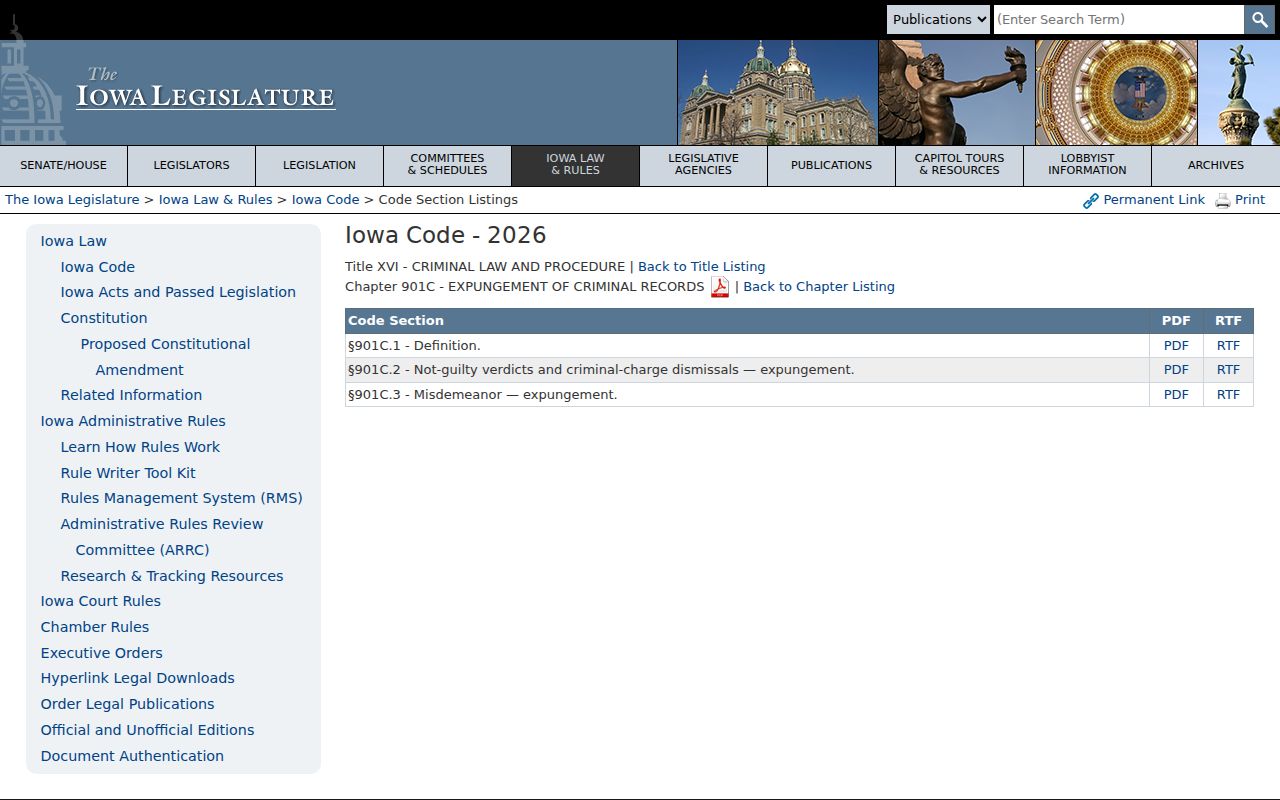
This separate statute helps prevent a mistaken assumption that a restricted court case always erases a registry duty.
Lawful Use and Community Notification
Registry information is meant for community awareness and lawful safety planning. Iowa's user agreement warns against vandalism, threats, assault, and other action against a registrant, a family member, or an associated person. Taylor County residents should direct suspected noncompliance to the sheriff and suspected crimes to law enforcement. The registry cannot prove that a person is currently dangerous, and a tier is not a county risk score.
Use registry records lawfully: Misusing registry information to threaten, vandalize, assault, or take other unlawful action is a crime. Iowa Code chapter 692A governs registry access and duties.
The Iowa Open Records Law explains general public-record access, while chapter 692A governs the registry's specific availability rules.
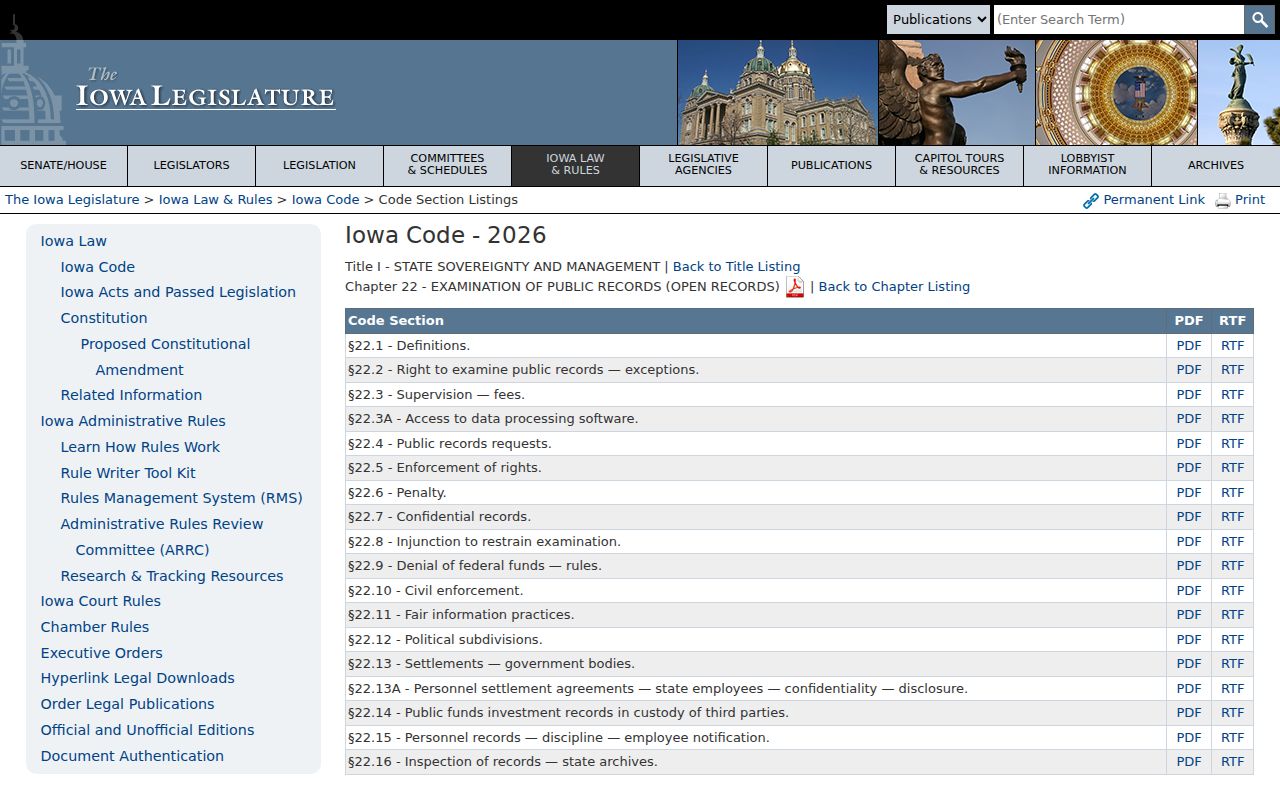
The two legal layers show why access to a public record does not remove limits on misuse or protected information.